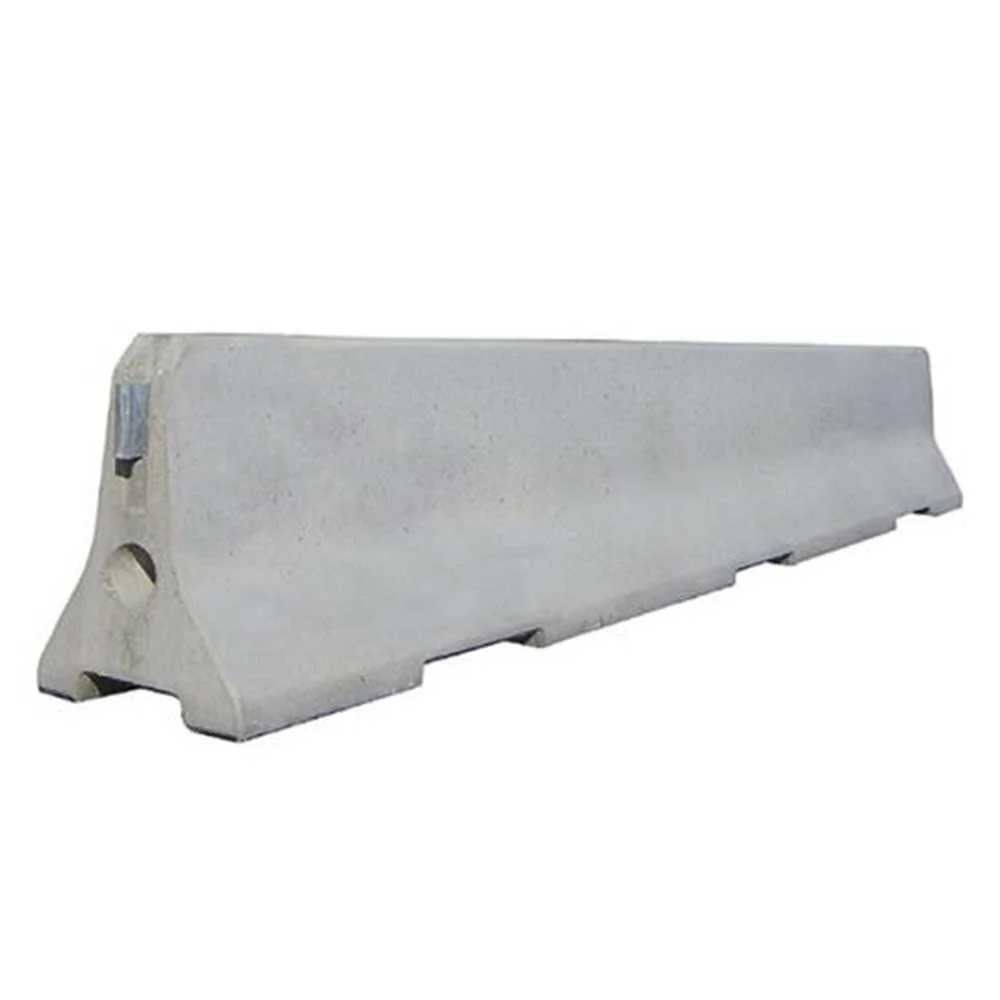
Technical Guide

Jersey vs F-Shape vs DB80: Which concrete barrier is right?

A side-by-side comparison of the three most common concrete traffic barrier profiles used on Queensland road works — with deflection, weight and TMR compliance data to help you specify the right system.

Why profile matters

All concrete barriers work by redirecting an errant vehicle back into the traffic lane. The barrier's face geometry — the "profile" — controls how the vehicle interacts on impact: how far it climbs, how much it rolls, and how much the barrier itself deflects. Jersey, F-Shape and DB80 are the three profiles most commonly hired in North Queensland, and each has trade-offs.

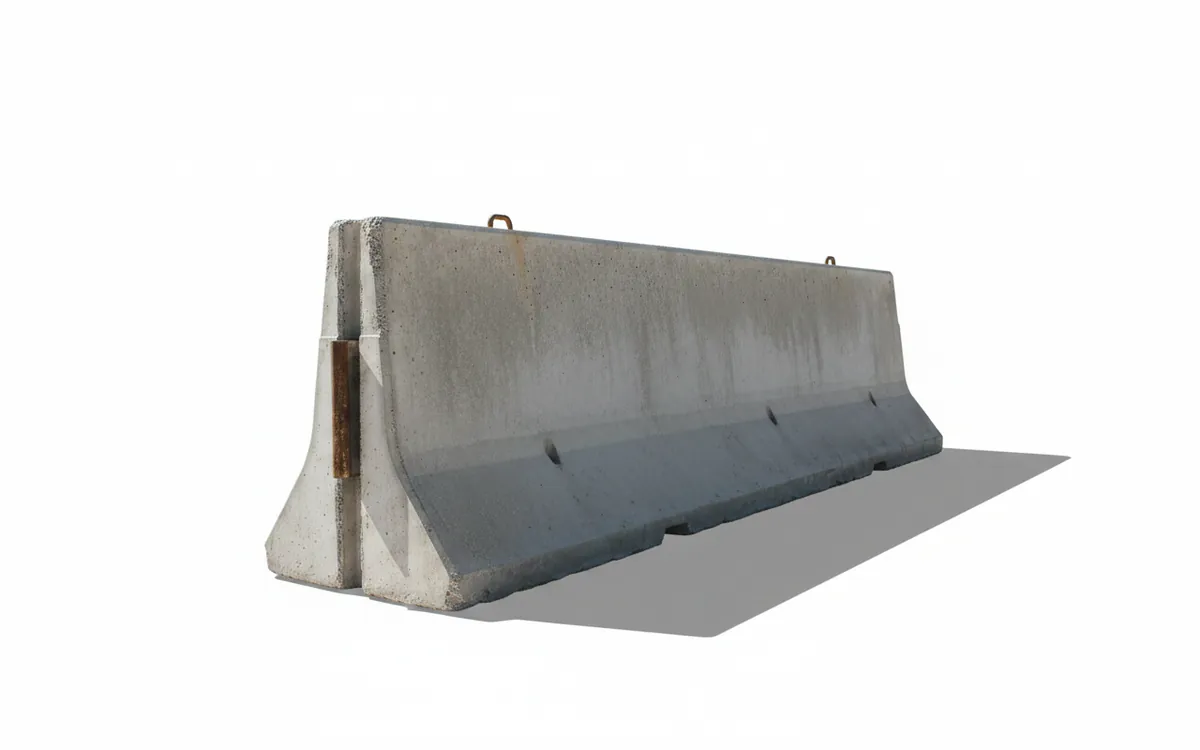
Jersey Barrier concrete barrier profile

Jersey Barrier

Classic 32° sloped face transitioning to a near-vertical top section.

Weight
~2.4–2.6 tonne per 3m segment
Deflection
1.20–1.40m (MASH TL3, 100 km/h)
Rating
MASH TL3
TMR
Approved as legacy profile — still permitted on many TMR works where deflection space exists.
Best for
General-purpose lane separation, work-zone shielding, event containment where the classic sloped face is acceptable.
F-Shape (JJ Hook) concrete barrier profile

F-Shape (JJ Hook)

F-Shape geometry with a lower break-point than Jersey — reduces vehicle climb and roll-over on impact.

Weight
2.6–3.1 tonne per segment
Deflection
1.60m (MASH TL3, 100 km/h)
Rating
MASH TL3
TMR
TMR-approved for road-side and median applications requiring positive containment.
Best for
Highway works, median separation and any deployment where the improved F-profile crash performance is preferred over Jersey.
DB80 concrete barrier profile

DB80

Modern low-deflection concrete profile with pin-and-loop steel connection between segments.

Weight
Up to 3.1 tonne per segment
Deflection
0.87m (MASH TL3)
Rating
MASH TL3 — up to 80 km/h
TMR
TMR-approved. Preferred where deflection space is limited (bridges, tunnels, narrow shoulders).
Best for
Constrained sites, bridge approaches, tunnel works and long-term separation where minimising deflection is critical.

Quick-reference comparison

ProfileDeflectionWeightRating
Jersey Barrier1.20–1.40m (MASH TL3, 100 km/h)~2.4–2.6 tonne per 3m segmentMASH TL3
F-Shape (JJ Hook)1.60m (MASH TL3, 100 km/h)2.6–3.1 tonne per segmentMASH TL3
DB800.87m (MASH TL3)Up to 3.1 tonne per segmentMASH TL3 — up to 80 km/h

All figures based on MASH TL3 crash-test data. Actual deflection varies with segment length, connection type and site conditions — confirm with your traffic management plan.

Need help specifying the right barrier?

Talk to our North Queensland team — 10+ years of civil experience specifying and installing every profile on this page.

Request a quote